What Is IFS Therapy? A Guide to Internal Family Systems
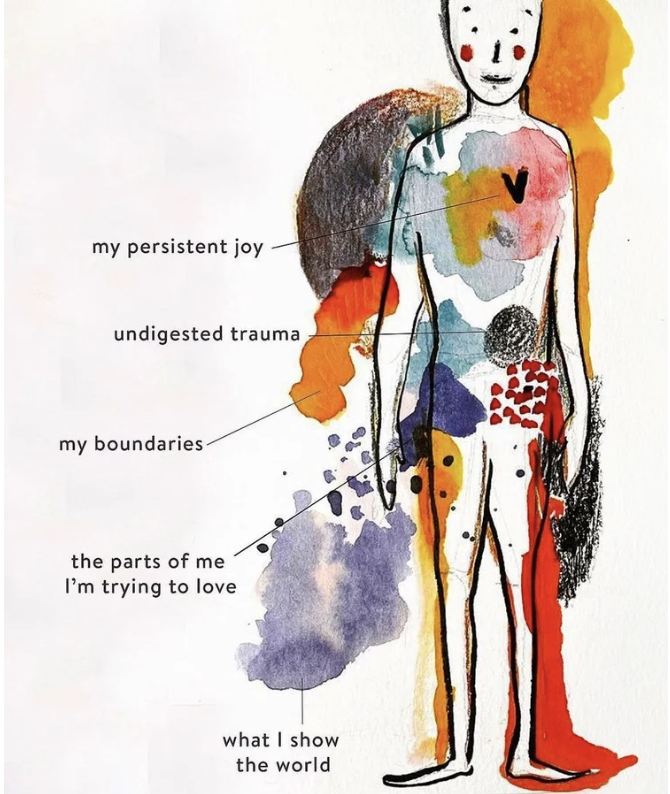
NOTE: All of the beautiful illustrations on this page were created by Rukumi Podder, who kindly gave me permission to share them.
Visit her website and support her here
Have you ever understood why you react a certain way, but still found yourself doing it again? Perhaps you replay conversations long after they’re over, work hard to keep everyone happy, or criticise yourself for not getting everything right. Maybe you want to make a change, but feel pulled in another direction.
These patterns can be especially difficult when they’re connected to trauma or other painful experiences. You might feel on edge even when you’re safe, shut down when someone gets close, or find that a memory or reminder brings up feelings that seem overwhelming. You may understand where these responses come from and still feel caught in them.
In Internal Family Systems (IFS) therapy, we don’t only talk about reactions from a distance. We slow down and connect to these experiences directly. With support, you can begin to meet it differently, rather than suppressing it or arguing yourself out of it. The aim is to build a different relationship with familiar reactions over time, while working at a pace that feels manageable.
This guide explains what IFS therapy is, how the model developed, what “parts” mean, what happens in a session, and what you might hope to gain from the work. You don’t need to know anything about IFS to read on or before starting therapy.
So what actually is IFS?
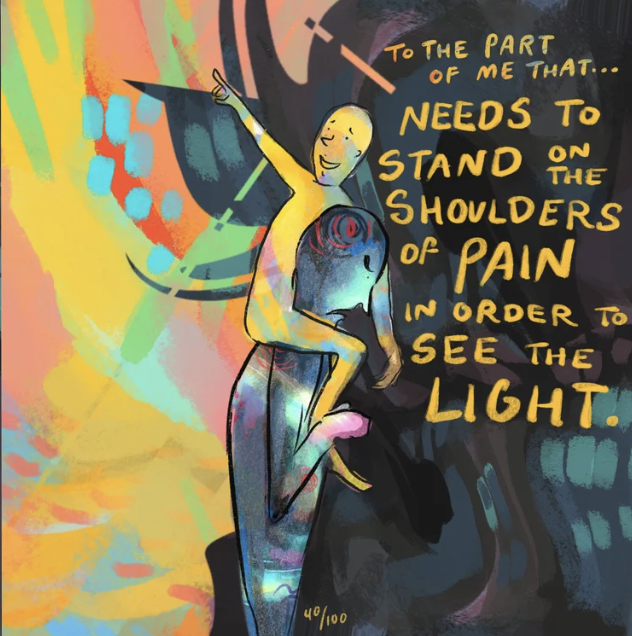
Internal Family Systems (IFS) is a therapeutic approach that helps people understand and relate differently to the different thoughts, feelings and responses within them.
You might feel ready to make a change, then find yourself hesitating when the moment arrives. You may want to speak honestly with someone, while also worrying about how they’ll respond. Or you might notice that one reaction, such as pushing yourself harder or pulling away, takes over before you can decide what you want to do.
Internal Family Systems (IFS) therapy offers a way to understand these different responses. It uses the word “parts” for the feelings, thoughts and impulses that can shape how we respond to life. In IFS, these parts are approached as meaningful aspects of your inner experience, not defects that need to be removed.
Even a response that causes problems may have developed to help you cope or feel safer. In therapy, we can get to know that response, explore what it’s concerned about and consider what might help you relate to it differently. The process is collaborative and guided by your experience, you don’t need to know anything about IFS before you begin.
What are “Parts” in IFS?
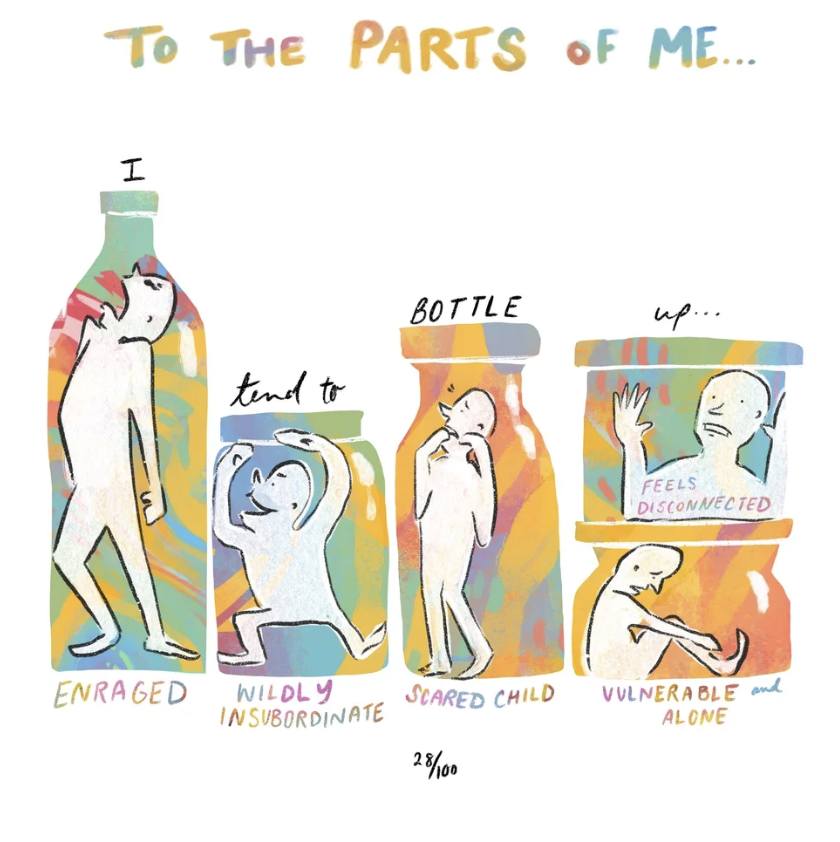
You can think of a part as a familiar pattern of feeling, thinking, remembering or responding that becomes more noticeable in certain situations. It may feel like an inner voice, an emotion, an urge, a body sensation or a combination of these. Parts are approached with respect, as inner beings with their own feelings, perspectives, memories and personalities. For some people, this feels like relating to distinct inner people, while for others it’s more a metaphor to relate to inner experiences. Calling it a “part” gives us a way to notice, “Something in me feels worried,” without making that feeling the whole story of who you are. IFS doesn’t require you to decide whether parts are metaphors, aspects of the mind, spiritual beings or something else. We don’t have to settle exactly what parts are in order to listen to them and take their experience seriously, however we know that when parts are approached with respect and curiosity, as though each has its own point of view, feelings and intentions, therapy is more effective.
In the IFS model, having parts is a natural part of being human. Parts can bring useful qualities: a drive to achieve, an ability to spot risks, a wish to care for others, or a capacity for play and creativity. They can help us meet everyday challenges, but difficult or overwhelming experiences can lead some parts to take on more extreme roles in an effort to protect us. A quality that once helped, like being prepared, might become constant vigilance; caring for others might turn into putting your own needs aside.
In IFS, we try to understand these responses rather than shame or force them away. The model groups parts into three broad roles: Managers, Firefighters and Exiles, which can help explain how different responses may work together. These are guideposts, not fixed labels, and your experience may not fit neatly into them.
-
Managers try to prevent difficult feelings or painful experiences from surfacing. They often do this by helping you plan, perform, stay alert or keep other people happy.
A Manager might show up as the part that:
Rehearses what to say before a conversation.
Pushes you to work harder or get everything right.
Notices possible problems and tries to prepare for them.
Says yes to avoid disappointing someone.
Keeps feelings private so you can stay in control.
These strategies can be useful. Planning can help you feel prepared, and caring about others can strengthen relationships. But if a Manager is working overtime, you might feel constantly on guard, under pressure or unable to rest.
-
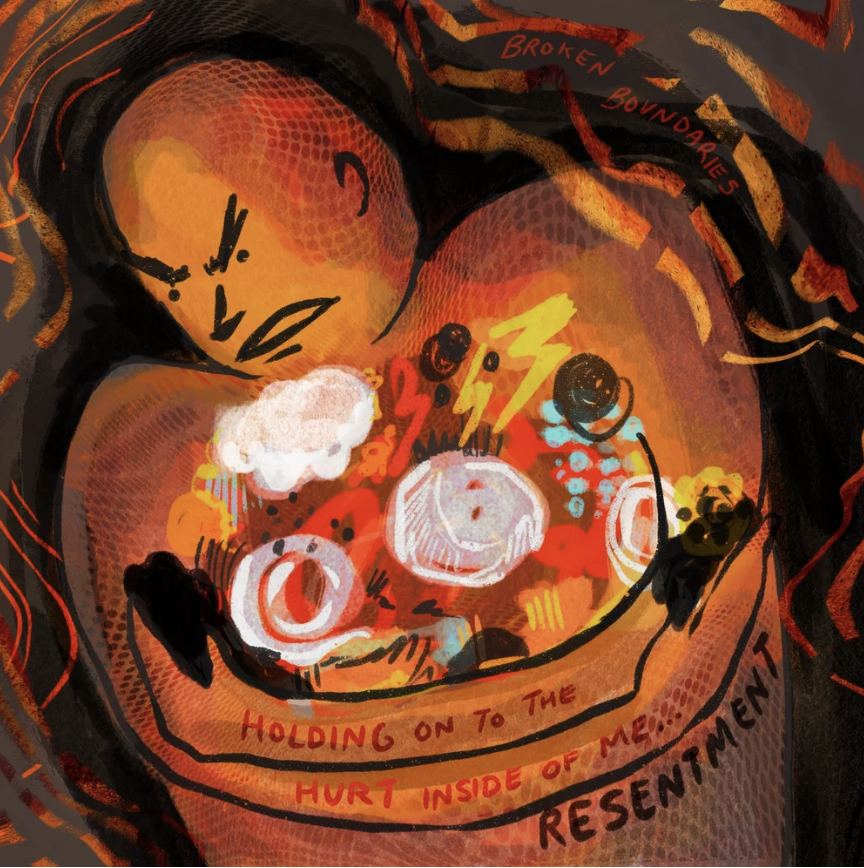
Firefighters react when painful emotions or memories break through, or feel close to the surface. Their focus is often on getting relief quickly, through distraction, numbing, escape or another immediate response.
A Firefighter might show up as the part that:
Reaches for a distraction when you feel overwhelmed.
Wants to withdraw or shut down during conflict.
Acts on an urge before you’ve had time to think it through.
Turns to food, alcohol or other substances to change how you feel.
Thinks about suicide or uses self-harm to stop pain
Some ways of seeking relief can create difficulties or carry risks. In IFS, the intention is to understand what the response is trying to manage, while also taking its effects seriously and considering what support may be needed.
-
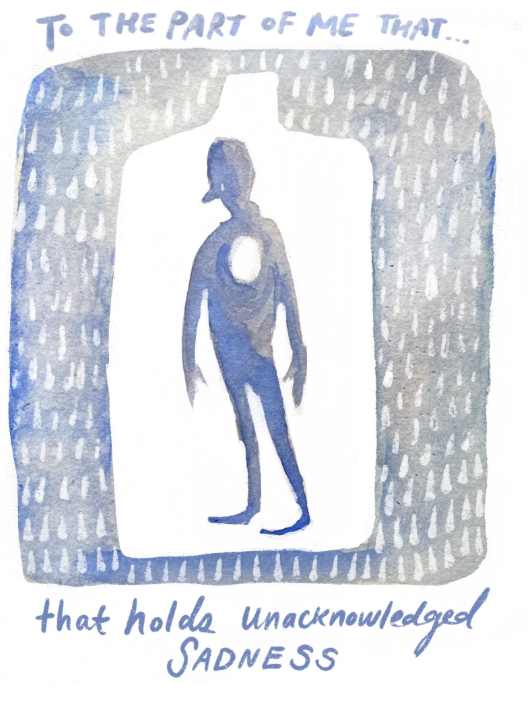
Exiles are parts that carry painful feelings, beliefs or memories. They may hold experiences of fear, shame, loneliness or not feeling good enough. Other parts may work hard to keep these feelings out of awareness because they seem too much to face alone.
You might notice an Exile’s feelings as a wave of sadness after criticism, a deep fear of rejection or a sense of being small and unsafe in a situation that reminds you of the past. These feelings can be tender and overwhelming, so we approach them carefully, after protective parts have given permission and at a pace that feels manageable. You don’t have to revisit a painful memory before you’re ready.


What does IFS mean by “Self”
IFS proposes that alongside our parts, each person has a core Self: an inner capacity that remains undamaged, even by severe trauma. In the model, painful experiences can leave parts carrying intense feelings and beliefs, while other parts take on protective roles. The Self is still there, though it may feel hard to access when those protective responses are taking over.
The Self is sometimes compared to the sun behind clouds. The sun hasn’t disappeared when clouds cover it, similarly, the model suggests that Self remains present even when trauma, distress or protective responses make it difficult to feel connected to. Therapy doesn’t create the Self. It helps make space for it to come through.
Richard Schwartz came to this idea through his work with clients. When he invited people to listen to their inner parts, he noticed that when there was room for a part to speak many clients began responding to it with calm, curiosity and compassion. When he asked what part of them was present in those moments, clients often described it as their core self. Schwartz came to call this quality Self.
Self isn’t another part and it doesn’t mean you should always feel calm or in control. It describes the capacity to meet your inner experience with qualities such as curiosity, compassion, clarity and courage. Therapy helps make room for this way of relating, so you can listen to your parts and understand what they may need, rather than being overwhelmed by them or judging yourself for having them.
This idea does not mean trauma leaves no lasting effects or that healing should happen through willpower alone. IFS therapy should respect your safety and pace, especially when working with painful experiences. The aim is to build trust with your parts and help them move out of extreme protective roles over time and heal the burdens that exiles have taken on.

What happens in an IFS therapy session?

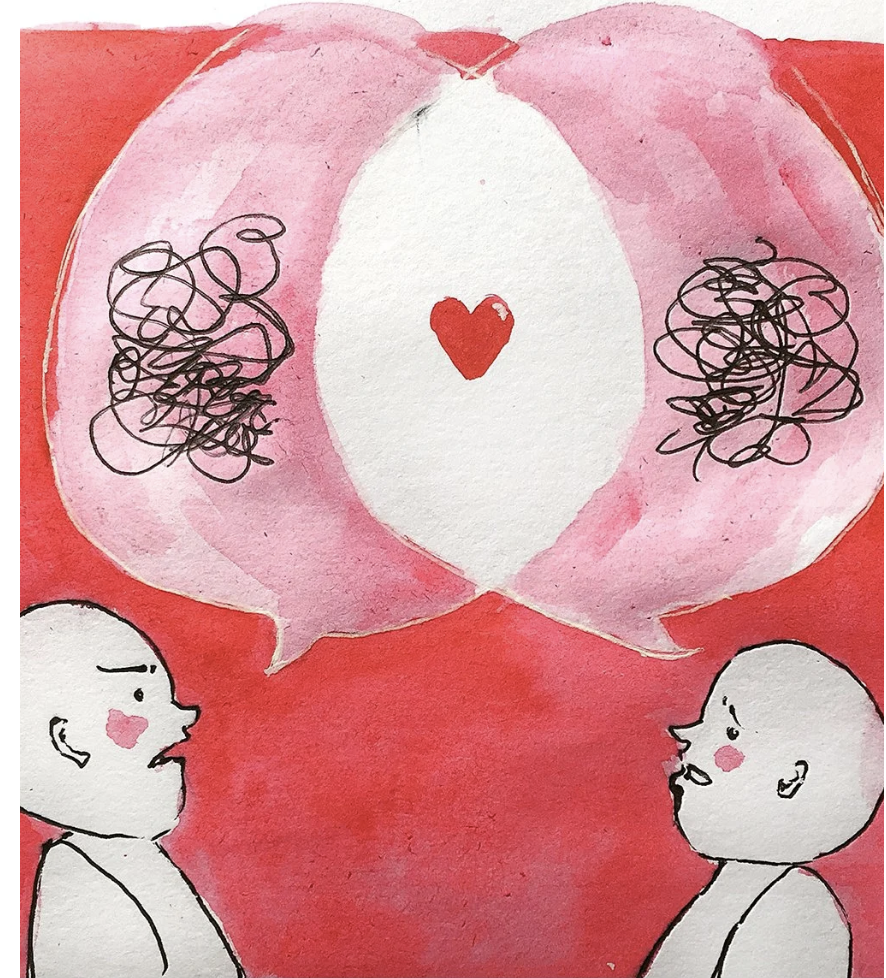
IFS sessions are collaborative. You and your therapist begin with what’s bringing you to therapy, then decide together what feels useful to focus on. You don’t need to know IFS or arrive with a clear explanation of what’s going on.
A session may include some of these steps:
Finding a focus: You might start with a situation, feeling or pattern you’d like to understand.
Turning your attention inward: Your therapist may invite you to notice what comes up as you focus on it, perhaps a thought, emotion, body sensation, image or impulse.
Getting to know the parts involved: Together, you can explore the different parts you notice, what each may be carrying or concerned about and how it may be trying to help.
Building a different relationship: As parts feel understood and supported, they may be able to let go of some of the painful beliefs and feelings they’ve been carrying, what IFS calls “burdens”, and take on roles that feel more helpful and less extreme.
These aren’t fixed steps and a session may not include all of them. Importantly, you set the pace and can pause, change focus or choose not to explore something further. In IFS, we don’t rush to painful memories or vulnerable parts. We first get to know the parts that protect you and listen to their concerns. If an Exile’s pain begins to come into focus, the work is to help you stay connected to the present and approach that experience with care, support and choice. You can slow down or pause at any point. The aim is for the part to feel witnessed and supported, and, when it’s ready, to begin letting go of some of what it has been carrying.
Early sessions may focus on getting to know you, understanding what you hope to change, and helping you feel comfortable with the approach. As therapy continues, you may explore parts and the relationships between them in more depth. The process differs from person to person, there’s no set sequence or guaranteed outcome.
Who might find IFS helpful?
If past experiences still affect you
You’ve been through trauma or painful experiences that continue to affect how safe, connected or settled you feel.
You feel on edge, shut down or disconnected, or find that reminders bring up powerful emotions.
You’re carrying grief or adjusting to a significant loss.
You want to approach painful experiences carefully, without feeling pushed to talk about everything before you’re ready.
If you feel caught in patterns or behaviours
You understand why you react a certain way, but still find it difficult to change what you do.
Anxiety, anger, shame or self-criticism can feel hard to manage once they take hold.
You find yourself repeating relationship patterns, even though you understand them intellectually.
You struggle with perfectionism, overworking, people-pleasing or setting boundaries.
You put things off or avoid situations when they bring up pressure, fear or uncertainty.
You’re struggling with alcohol or other substance use, or with eating behaviours that feel distressing or difficult to change.
You rely on coping strategies that bring short-term relief but are affecting your wellbeing or relationships.
You feel pulled between different needs, for example, wanting closeness while also wanting to withdraw.
If you want a different relationship with yourself or your life
You’re tired of being hard on yourself or feeling you must get everything right.
You’re experiencing low mood, hopelessness or a loss of interest in things that used to matter to you.
You feel stressed, burnt out or overwhelmed by work, caring responsibilities or other demands.
You’re facing a major life change, such as becoming a parent, separating, managing illness or changing work and feel unsure how to move forward.
You want to understand your reactions without judging yourself for having them.
You’d like to feel more connected to what you need and have more choice in how you respond.
What might change through IFS therapy?
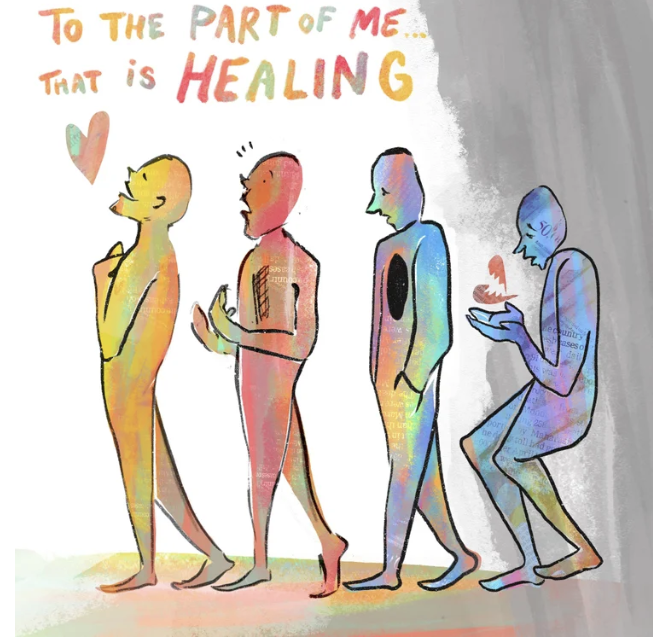
People often describe IFS as creating more room inside, where feelings or reactions once seemed to take over, there may gradually be more space to notice what’s happening and choose how to respond.
As you get to know your parts and understand what they’ve been carrying, you may begin to feel less at the mercy of intense emotions, more connected to your body, and more able to stay present when something difficult arises. A part that once had to work hard to protect you may start to feel heard and supported. In the IFS model, this can allow it to loosen its extreme role and bring forward more of its helpful qualities.
In the IFS model, when an Exile releases what it has been carrying, it may reconnect with qualities that were present before those painful experiences took hold, such as playfulness, curiosity, spontaneity or a sense of wonder. People sometimes find that they have more room for creativity too, returning to music, painting, writing or other activities they had set aside. These changes aren’t guaranteed or the same for everyone, but they can be a welcome part of feeling more connected to yourself.
Over time, people may experience greater inner safety, clarity and trust in themselves. They may feel less divided by competing reactions and more connected to who they are beneath old fears and expectations. sometimes described as feeling “more like myself.”
Healing can feel meaningful and even profound, but it’s rarely a straight line. Everyone’s experience is different, and IFS can’t promise a particular outcome. The work unfolds at your pace, with space to notice what is changing and what support you need along the way.
What does the research say?

When choosing therapy, you may want to know what research says about the approach. The evidence base varies between therapies, and research into Internal Family Systems (IFS) is supported by a growing body of research.
Emerging research suggests IFS may:
Help reduce trauma-related symptoms for some people, including symptoms associated with post-traumatic stress.
Support people experiencing depression and difficulties managing strong emotions.
Encourage greater self-compassion and a sense of wellbeing.
As with any therapy, outcomes vary depending on the person, their circumstances and the therapeutic relationship. Read more on the research here.
How do I get started with IFS therapy?
You don’t need to understand IFS or know which parts are involved before starting. You can begin by sharing what’s been difficult, what you’d like help with, and any questions or concerns you have about therapy.
In an initial conversation, we can talk about what brings you to therapy, what you hope might change, and whether working together feels like a good fit. You’re welcome to ask about my training and experience, how I approach trauma and pacing, what to expect from sessions and anything else you are curious about.
We can take time to build trust and find an approach that feels manageable for you. If you’re curious about whether IFS therapy might suit you, get in touch to arrange an initial conversation.